How founders should think about taking Private Equity investment.
Many founders approach private equity as a liquidation event.
But from the perspective of an investor, the decision is far broader. Taking investment means committing to a shared plan, shared outcomes, and shared accountability over several years.
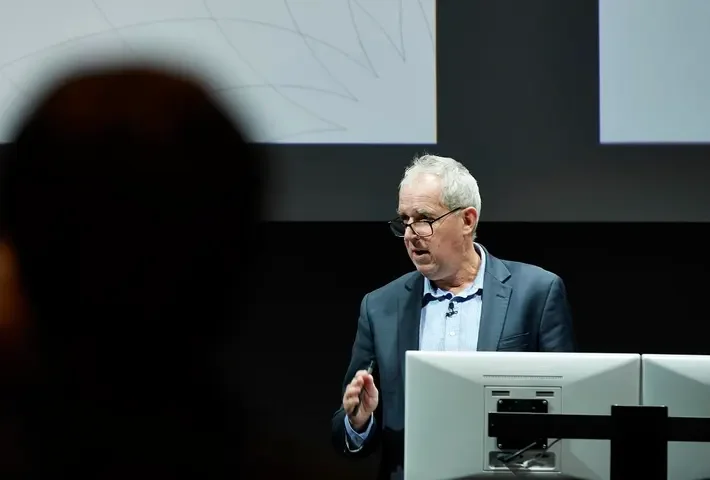
In our conversation with David Gilmour, Head of PE & VC at Finex Advisory, one theme was clear: Founders often underestimate how much alignment matters after the deal is done. This article outlines some of the key considerations founders should think about before taking private equity investment.
Investment is an agreement on a future plan
At its core, private equity investment is an exchange.
A founder receives capital today in return for a share of future value. But that value is not abstract - it is built on a forward plan that both sides must believe in.
In practice, the most important pre-investment discussion is not valuation. It is agreement on how the business will grow. This matters because not everyone involved in the deal is always incentivised in the same way. Bankers focused on getting a transaction completed may push founders towards an aggressive budget or growth plan to help get the deal through. Founders therefore need to make sure the plan is not just attractive to investors, but realistic and genuinely deliverable.
Before entering a process, founders should be able to clearly answer:
What milestones are investors funding?
What timeline is expected?
What evidence will show progress?
When this level of clarity is missing, tension often emerges later, not because the strategy is wrong, but because expectations were never fully aligned.
Growth capital vs buyout is a control decision
Founders often ask whether growth investment or a buyout is the “right” route. The distinction is simple in principle, but significant in practice.
Growth capital involves bringing in an investor who participates in future upside while founders retain control of the business. A buyout involves transferring ownership, with control shifting to the acquirer.
The decision therefore becomes less about structure and more about intent. Founders considering growth capital should reflect on whether they want a partner for the next phase of growth. Those considering a buyout are usually exploring a transition of ownership, often while remaining involved in the business for the next development phase.
Neither path is inherently better - but they lead to very different journeys.
What makes a strong private equity partner
A successful investment relationship typically starts with a shared view of the future.
Investors will usually have an expected holding period, a target outcome, and defined triggers for exit. Founders should understand these early, rather than discovering them through experience.
Equally important is understanding whether further capital may be required. Many investments are not one-off events but part of a longer funding journey.
The most effective partnerships tend to be those where both sides view the investment as a structured plan rather than a single transaction.
Great investments are built on a sustainable advantage
From an investor perspective, the most attractive opportunities are businesses with a defensible edge.
This does not always mean market dominance or unique technology. More commonly, it means a combination of factors that create sustained differentiation - such as strong positioning, embedded customer workflows, or capabilities that are difficult to replicate. However, investment decisions always involve judgement.
Investors assess market size, competitive dynamics, and growth potential, but ultimately they are forming a view about the future. These factors are important because they underpin predictability and stability, which ultimately allows for leveraged bets.
For founders, this reinforces the importance of clearly articulating why their business can win.
Governance becomes part of value creation
Following investment, governance structures typically evolve.
Boards expand, chairs may be appointed, and new perspectives enter decision-making. The purpose of this is not control for its own sake, but improved judgement.
An effective board brings experience, challenge, and cohesion. The chair plays a particularly important role in aligning perspectives and guiding discussion toward constructive outcomes.
For founders, embracing this dynamic - rather than viewing it as interference - often improves strategic clarity.
Delivery matters more than the original plan
Once investment is complete, progress against milestones become central.
Revenue growth, product launches, customer wins, and operational improvements all serve as indicators that the investment thesis remains intact.
Missing targets does not automatically undermine confidence, particularly if the underlying strengths of the business remain intact. What matters most to investors is whether the core drivers of the investment case, such as competitive advantage, market position or product differentiation still hold. Transparency and responsiveness then help maintain trust while the business works to get back on track.
Where founders communicate openly and present credible plans to address gaps, partnerships tend to remain strong. Where issues are obscured, trust erodes quickly.
The role of advisors
Founders sometimes question whether external advisors are necessary.
While strong boards can provide significant support, independent advisors often add objectivity, market perspective, and process experience that internal stakeholder may lack.
The value of advice is rarely in theoretical insight. It lies in helping founders interpret the market, validate assumptions, and navigate negotiations with clarity.
In many cases, this external perspective contributes to better outcomes than a purely internal approach.
At Finex Advisory, we help founders navigate this process by supporting them in selecting the right private equity partner. Unlike traditional M&A advisors, we work hands-on with management teams, not only sourcing and executing the transaction, but also supporting founders through the intense post-investment period, including the 100-day plan and beyond.
About the Author
David Gilmour is the Head of private Equity & Venture Capital at Finex Advisory. He previously led the global venture capital arm of BP and founded BP LaunchPad, the company’s business-building and scale-up platform.
David has extensive experience investing in and scaling technology businesses and has advised a number of leading investment firms and portfolio companies. He has served as a senior advisor to Antin Infrasturcture Partners NextGen fund and as a senior advisor at McKinsey.
As the previous Global Head of BP Ventures, David was responsible for managing a $600m venture portfolio and invested in more than 40 companies throughout his career.